Components
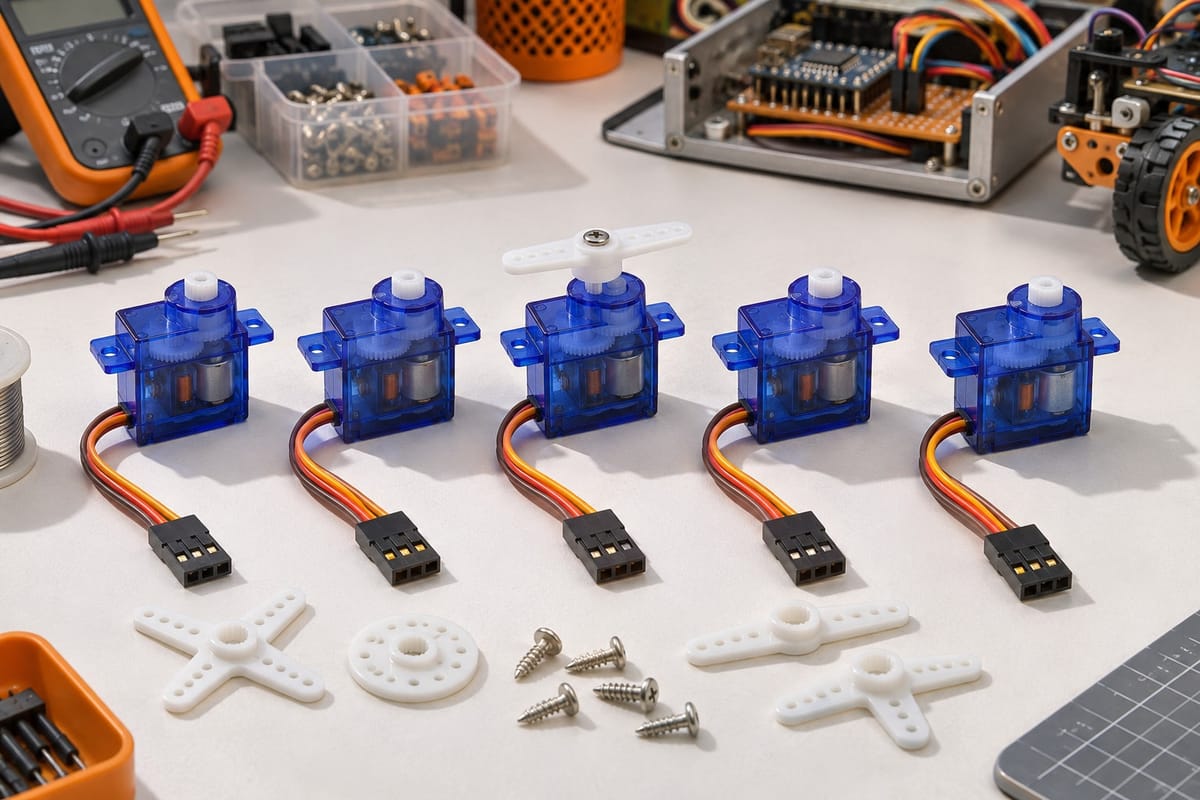
SG90 Servo Motor 5-Pack
Five micro servos delivering precise 180° rotation and analog control. Build robotic arms, camera mounts, steering mechanisms, and articulated joints for your Raspberry Pi or Arduino projects. Standard connector, straightforward PWM control.
- Rotation 180°
- Control Analog PWM
- Quantity 5 motors
- Connector Standard 3-pin
Why this pack works
What you can build
Multi-joint arm with gripper
Use four servos for shoulder, elbow, wrist, and base rotation, plus one for a gripper mechanism. Control each joint independently to pick up and move small objects.
Mount the arm on a stable base or integrate it into a mobile robot chassis. PWM signals from your Pi or Arduino set each joint's angle in real time.
Pan-tilt tracking system
Two servos create a pan-tilt mount for a Raspberry Pi camera module or webcam. One motor handles horizontal rotation, the other vertical tilt.
Combine with computer vision libraries to track faces, objects, or motion. The remaining three servos are ready for additional articulation or a second camera rig.
Differential or Ackermann steering
Connect servos to front wheels for precise steering control. One servo per wheel for Ackermann geometry, or a single servo for simpler differential steering.
The extra motors in the pack let you prototype multiple steering designs or build a second vehicle without reordering components.
Technical specifications
Mechanical
- Rotation range
- 180° (90° each direction from center)
- Form factor
- Micro servo
- Dimensions (each motor)
- Approx. 23 × 12 × 29 mm
- Weight (each motor)
- Approx. 9 g
- Output shaft
- Splined, includes horn set
Electrical
- Operating voltage
- 4.8–6 V DC
- Control signal
- PWM (pulse width 1–2 ms, 50 Hz typical)
- Connector
- 3-pin header (signal, power, ground)
- Current draw
- Varies by load; typical range under moderate load
Package contents
- Quantity
- 5 × SG90 servo motors
- Accessories
- Horn sets and mounting screws included (one set per motor)
How to connect
Common questions
Can I control all five servos from one Raspberry Pi?
Yes, but each servo needs its own PWM-capable GPIO pin. The Pi 4 has hardware PWM on GPIO 12, 13, 18, and 19; use software PWM libraries for additional channels. For more than four servos, consider a dedicated PWM controller board like the PCA9685.
Do I need external power, or can I run these from the Pi's 5V pin?
One or two servos under light load may run from the Pi's 5V pin, but five servos will exceed the safe current limit and risk brownouts or SD card corruption. Use a separate battery pack or bench power supply rated for at least 1 A, and connect the grounds together.
What's the difference between 4.8 V and 6 V operation?
Higher voltage increases torque and speed slightly. At 4.8 V the servo delivers its rated torque; at 6 V you gain a modest boost. Exceeding 6 V risks damaging the internal motor and control circuit.
Are these servos compatible with Arduino libraries?
Yes. The standard Arduino Servo library works out of the box. Attach each servo to a digital pin, call `write(angle)` to set position, and the library handles PWM signal generation.
Can I replace a defective servo, or do I need to buy another pack?
SG90 servos are widely available as individual units. If one motor fails, you can source a replacement from most electronics distributors without reordering the full pack. Contact us for support if a motor arrives defective.
Pair with these components
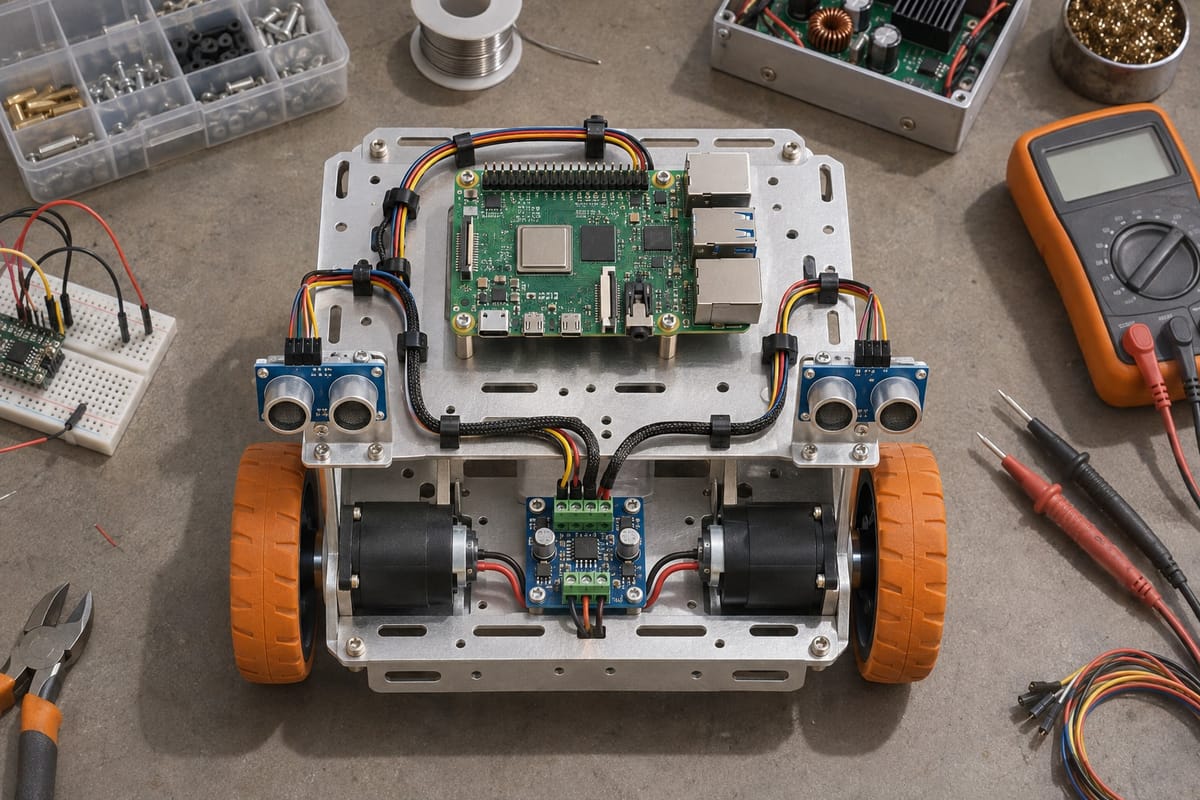
Raspberry Pi Robot Starter Kit
Complete kit with Raspberry Pi 4, dual motor driver, ultrasonic sensors, and aluminum chassis. Everything you need to build and program your first autonomous robot.
Read more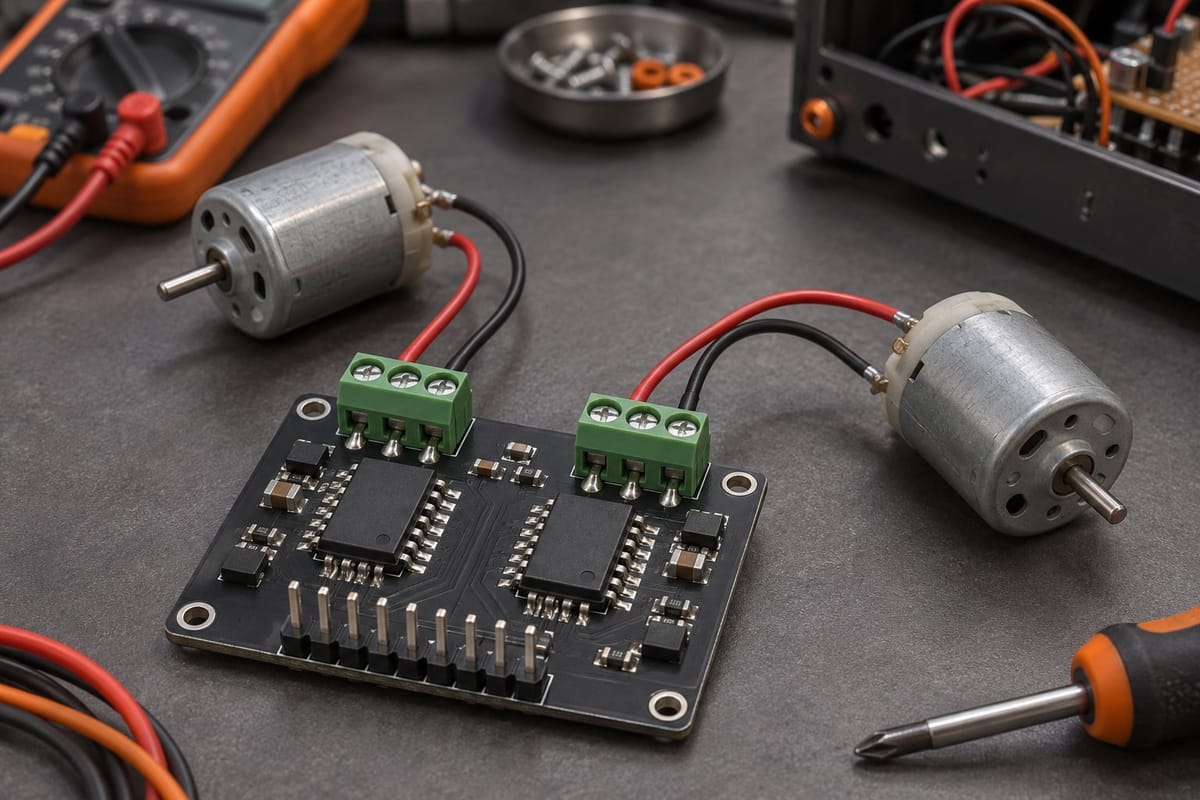
Dual H-Bridge Motor Driver
Drive two DC motors independently with PWM speed control up to 2A per channel. Works seamlessly with Raspberry Pi and Arduino projects, ideal for wheeled robots and automated mechanisms.
Read more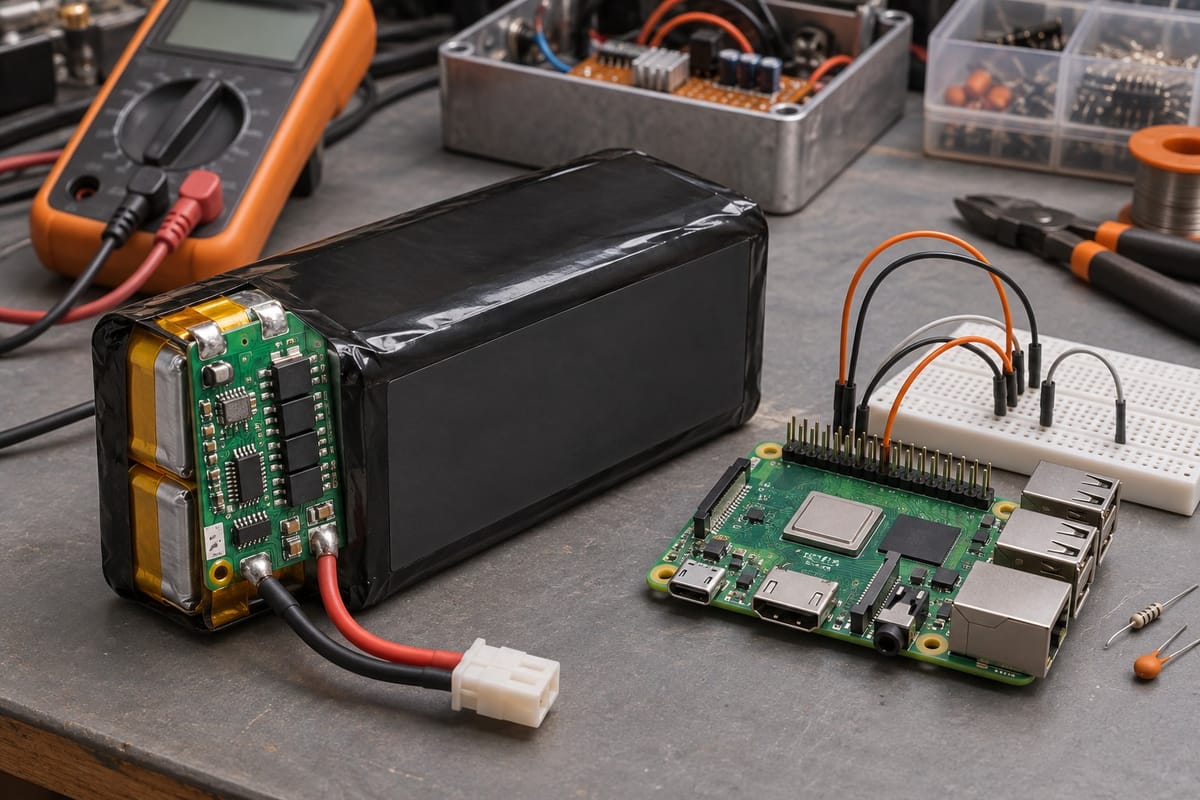
3000mAh Li-Ion Battery Pack
Rechargeable 7.4V Li-ion pack with 3000mAh capacity and built-in protection circuit. Designed for Raspberry Pi robots, motor controllers, and portable electronics projects.
Read more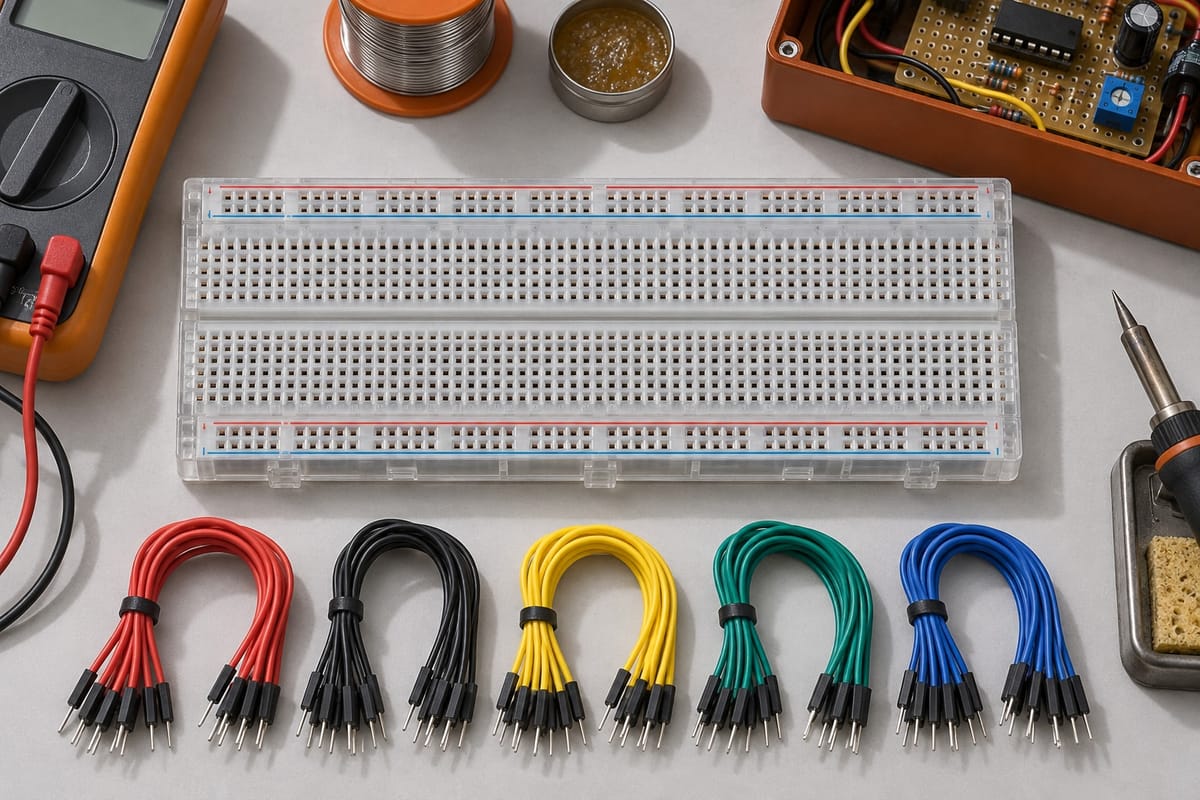
Breadboard & Jumper Wire Set
830-point solderless breadboard paired with 65 color-coded jumper wires. Build and test circuits without soldering—ideal for prototyping, learning, and iterating on robotics designs.
Read more