robotics components · sourcing strategy · hobby robotics · supply chain
US vs China Robotics Components in 2026: Where Should Hobbyists Buy?
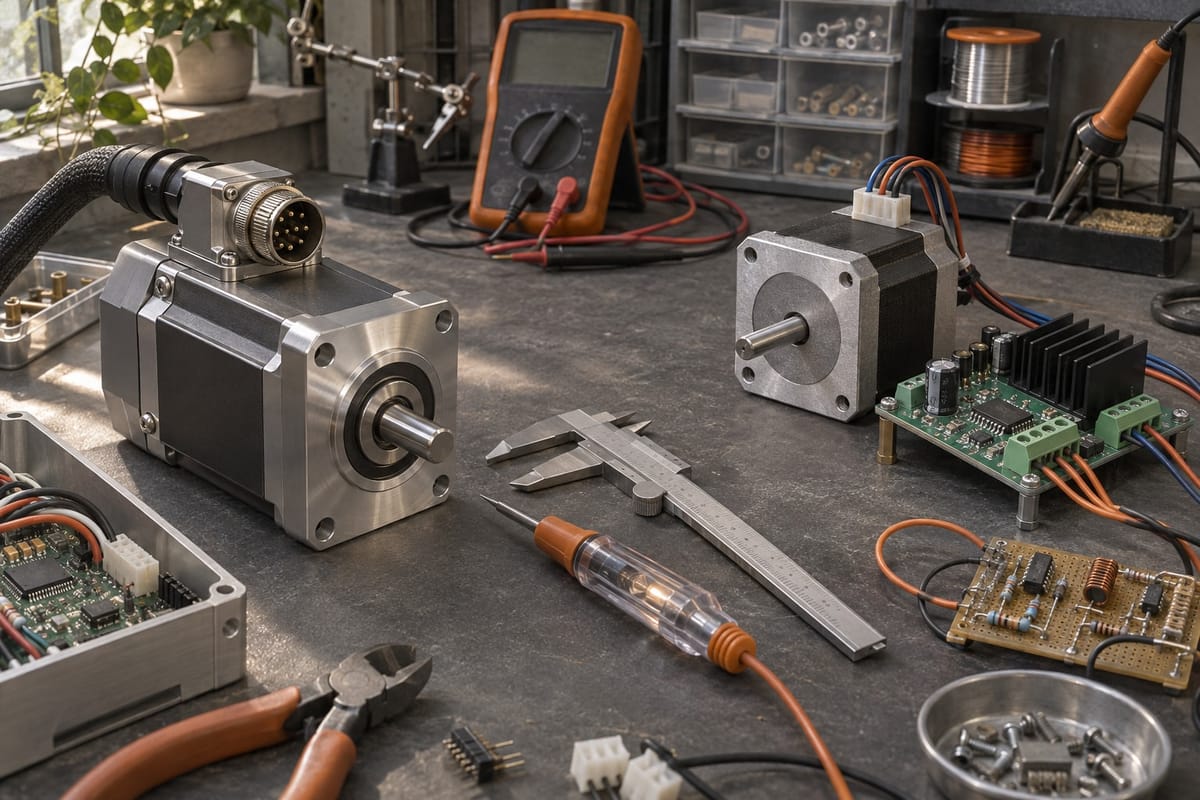
The choice between US-made and Chinese robotics components isn't as simple as it was even two years ago. China has moved beyond being a source of cheap, low-quality parts—domestic manufacturers now produce precision actuators, harmonic reducers, and motor controllers that rival Western equivalents in many applications. Meanwhile, US component suppliers face longer lead times, tighter inventory, and prices that reflect ongoing supply chain pressures.
For hobbyists building everything from simple Raspberry Pi robots to more complex manipulator arms, understanding where each market excels will save you time, money, and frustration.
Quality and Reliability: The Gap Is Closing
Chinese robotics components once carried a reputation for inconsistent quality control and short lifespans. That narrative is outdated. Major Chinese suppliers now ship components with tolerances tight enough for collaborative robot arms, and their actuators power commercial-grade systems deployed in factories across Asia and Europe.
Where Chinese components excel: Stepper motors, brushless DC motors under 500W, aluminum extrusion frames, basic motor controllers, and MEMS sensors. These categories have matured to the point where quality variation between suppliers matters more than country of origin. A well-reviewed Chinese stepper motor from a reputable platform will outperform a no-name US part every time.
Where US components still lead: High-precision encoders, industrial-grade servos with sub-arc-second repeatability, radiation-hardened electronics, and specialized sensors for harsh environments. US manufacturers also maintain tighter documentation standards, which matters when you're debugging a finicky feedback loop at 2 a.m.
For hobby projects, the practical difference often comes down to support and documentation rather than raw performance. A Chinese brushless motor will spin your robot's wheels just fine, but if the datasheet is vague or the English translation is rough, you'll spend extra time reverse-engineering the pinout.
Pricing: China Wins on Cost, but Factor in Hidden Expenses
Chinese components typically cost 40–70% less than US equivalents for comparable specifications. Entry-level servo motors, microcontrollers, and sensor modules show the widest gaps. A 20kg-cm digital servo from a Chinese supplier runs $12–18, while a similar US-made unit starts around $35.
That price advantage shrinks when you account for shipping times, customs delays, and the occasional need to order duplicates because one unit arrives DOA. US suppliers charge more upfront but offer faster returns, better warranty handling, and the ability to get a replacement part in days rather than weeks.
If you're prototyping and iteration speed matters more than per-unit cost, buying from US distributors with next-day shipping can actually be cheaper in total project time. If you're building ten identical robots and can absorb a longer timeline, Chinese pricing becomes much more attractive.
Lead Times: US Suppliers Are Stretched Thin
Lead times for robotics components remain unpredictable in 2026. US-based distributors report component inventory sitting 18% below pre-2024 levels, and popular items—especially precision motion control parts—regularly go on backorder.
Typical US lead times: In-stock commodity items ship in 1–3 days, but anything requiring manufacturing or special order stretches to 4–12 weeks. High-precision encoders and industrial servo drives can hit 26 weeks depending on the manufacturer's backlog.
Typical Chinese lead times: Direct-from-manufacturer orders via platforms like Alibaba average 5–10 days for standard parts, with expedited processing available in 1–3 days for an upcharge. Add another 7–21 days for international shipping depending on whether you choose economy or express. Total time from order to doorstep: 12–30 days for most hobby components.
The wildcard is customs. A package can clear in two days or sit for two weeks with no rhyme or reason. If you need a part by a specific date, order Chinese components at least a month out, or pay the premium for US stock.
Sourcing Strategy: Mix and Match Based on Project Phase
Smart hobbyists don't pick one country and stick with it—they source strategically based on what the project needs right now.
During Prototyping and Testing
Speed and flexibility matter most. Buy from US distributors with generous return policies so you can swap a motor, try a different sensor, or replace a burned-out controller without waiting weeks. The higher per-unit cost is worth it when you're iterating quickly and learning what actually works.
During Final Build and Scale-Up
Once your design is locked in and you know exactly which components you need, switch to Chinese suppliers for non-critical parts. Order in small bulk (5–10 units) to get better pricing and reduce per-unit shipping costs. Keep one US-sourced spare of each critical component on hand in case something fails mid-project.
Components Worth Buying US
- Power management circuits for battery systems where safety matters
- High-resolution encoders if your project needs closed-loop position control
- Specialized sensors with limited availability or complex integration requirements
- Anything you might need to return or replace quickly during crunch time
Components Worth Buying Chinese
- Mechanical parts like brackets, frames, wheels, and gears
- Commodity motors (standard steppers, brushless outrunners, geared DC motors)
- Passive components (resistors, capacitors, connectors, wire)
- Generic microcontroller boards and breakout modules for common sensors
What About Tariffs, Sanctions, and Trade Policy?
Trade restrictions tightened in 2026, with Washington imposing tariffs on imported drones and advanced robotic systems. So far, hobbyist components—motors, sensors, controllers—have largely avoided the heaviest restrictions, but the regulatory landscape remains fluid.
For now, individual hobbyists ordering small quantities face minimal friction. Large bulk orders and anything with dual-use potential (high-precision parts that could be used in industrial or military applications) attract more scrutiny. If you're ordering dozens of servo motors at once, expect customs to take a closer look.
The practical advice: diversify your supplier base. Don't build a project that depends entirely on one Chinese manufacturer or one US distributor. Have a backup source identified for every critical component so you're not scrambling if a supplier goes out of stock or a new tariff lands.
Practical Tips for Hobbyists Ordering in 2026
- Read reviews obsessively. Chinese suppliers vary wildly in quality. A vendor with 5,000 positive reviews and detailed photos is a safer bet than a newcomer offering a suspiciously low price.
- Order one sample before buying bulk. Even from a well-reviewed supplier, order a single unit first to verify it matches the specs and works with your setup.
- Check the return window. Many US distributors offer 30–90 day returns. Some Chinese platforms offer returns, but you'll often eat the return shipping cost, which can exceed the part's value.
- Factor voltage and connector standards. Chinese components sometimes ship with Chinese-standard plugs or expect 220V input. Verify specs before ordering.
- Track lead times seasonally. Chinese suppliers slow down significantly around Lunar New Year (late January to mid-February). US suppliers see delays around major holidays and back-to-school season when educational buyers flood the market.
The Bottom Line: It's Not Either-Or
The US-vs-China question isn't about picking a side—it's about understanding what each market does well and building a sourcing strategy around your project's actual constraints. If you're prototyping fast, need rock-solid documentation, or can't afford delays, US suppliers deliver value despite higher prices. If you're cost-conscious, working on a longer timeline, and comfortable navigating occasional quality inconsistencies, Chinese components offer unbeatable economics.
Most successful hobbyists end up with a hybrid bill of materials: Chinese mechanical parts and commodity electronics, US sensors and power systems, with enough lead time and spare inventory to handle surprises. That approach balances cost, speed, and risk better than committing entirely to one supply chain. For more guidance on selecting components for your next build, explore our other robotics guides.